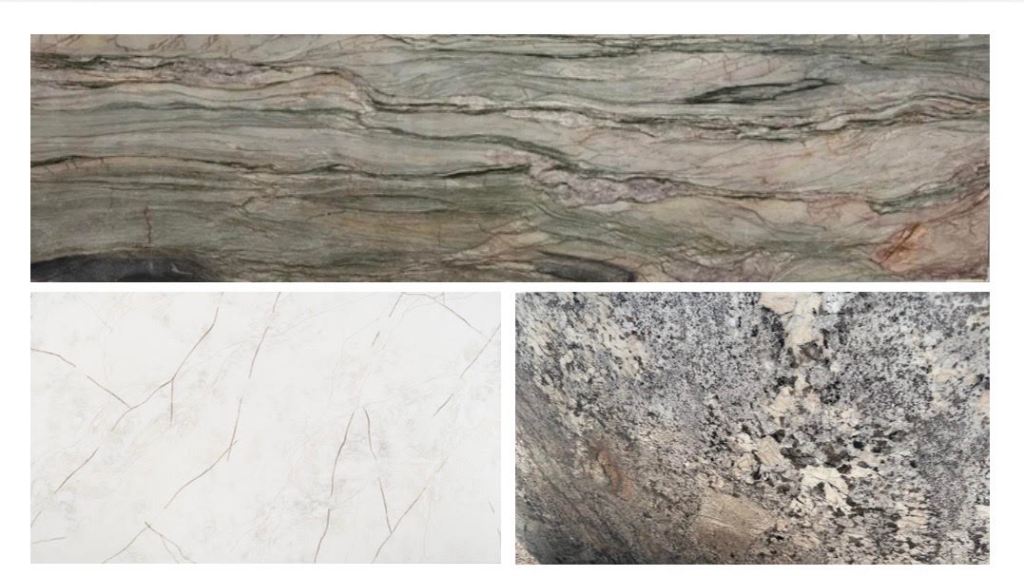
Countertops are one of the biggest material investments you will make in your home. They take up a lot of visual space, affect how a room functions, and are not something most people want to replace a few years later because they chose the wrong surface.
Of course, appearance matters. You should love the way your countertops look. But the prettiest surface is not always the right surface for your lifestyle.
Before you choose, think about how you actually live.
Do you cook often? Are you a messy cook? Do you clean spills immediately, or are you more likely to come back to them later? Do you regularly take pans out of the oven and place them on the counter? How much maintenance are you willing to do? In a bathroom, do you leave cosmetics, hair products, or oils sitting on the vanity?
The answers matter because granite, quartzite, soapstone, marble, and quartz do not perform the same way.
Granite
Granite is a durable natural stone that is resistant to scratches and heat. It is available in a wide range of colors and patterns, and because it is natural, every slab is unique.
Some granite benefits from sealing, while other varieties may not need it. The specific stone, its porosity, the sealer, and the amount of use all affect its maintenance needs. Your fabricator should tell you exactly what your slab requires.
Granite handles heat well, but I still recommend using a trivet under pans taken directly from the oven. Sudden temperature changes can damage even a durable stone, especially near an edge.
Granite can be a great choice for someone who wants natural variation, durability, and relatively easy care.
Quartzite
Quartzite is a natural stone that often has the beautiful movement people love about marble, but it is generally harder and more durable.
It typically needs to be sealed about once a year. That timing can vary depending on the particular stone, where it is installed, the type of sealer used, and the amount of daily use. A heavily used kitchen may need more frequent attention.
Quartzite is heat resistant, but I still recommend using a trivet under a hot pan to protect both the stone and its sealer from thermal shock.
Quartzite may be a good fit if you want the depth and variation of natural stone and are comfortable with routine sealing.
Soapstone
Soapstone is sometimes called the chef’s countertop because it works beautifully in a hardworking kitchen.
It is nonporous, heat resistant, and not affected by common kitchen acids such as lemon or tomato juice. Hot cookware can generally be placed directly on it, and spills wipe away easily with a damp cloth.
Soapstone is softer than granite or quartzite, so it can scratch or dent. Those marks are not stains, and minor scratches can often be sanded or blended with mineral oil. Many people love the patina and character soapstone develops over time. Others may prefer a surface that continues to look more pristine.
Soapstone can be an excellent choice if you want a surface that can handle real use and you appreciate materials that age visibly.
Marble
Marble is timeless, natural, and beautiful. It is also a softer, higher maintenance stone that is not right for every person or every room.
Wine, cooking oils, food, cosmetics, and hair products can stain it. Acidic substances such as lemon juice, vinegar, wine, and some cleaning products can etch the surface and leave dull marks.
Staining and etching are not the same thing. A sealer can make marble more resistant to stains, but it cannot prevent an acid from reacting with the stone and etching the finish.
Marble needs to be sealed regularly according to the needs of the particular stone, sealer, location, and amount of use.
If you are a messy cook, leave spills on the counter, or regularly set cosmetics, oils, and hair products on your bathroom vanity, marble may not be the best fit for your lifestyle. If you love the way natural stone develops a patina and are comfortable caring for it, you may decide that its beauty is worth the maintenance.
Quartz
Quartz is an engineered surface made with natural quartz minerals, pigments, and binders. It is nonporous, consistent, easy to maintain, and does not require sealing.
That makes it a practical option for busy households and for people who want more control over the color and pattern of the finished surface.
Quartz is not the same as quartzite. It also does not handle direct heat the same way many natural stones do. The resins and binders can be damaged by high temperatures or sudden temperature changes. Never place a pan directly from the oven onto quartz. Always use a trivet or heat pad, and follow the care instructions from the manufacturer.
Quartz may be a good choice if low maintenance and a more consistent appearance are priorities.
Your Countertop Should Never Be Chosen in Isolation
Performance is only part of the decision. A beautiful countertop can still be the wrong choice if it does not work with everything around it.
Your countertops need to coordinate with your cabinetry, backsplash, flooring, plumbing fixtures, hardware, lighting, and any other permanent surfaces in the room.
The worst outcome is investing in a beautiful slab and then surrounding it with a cabinet color, backsplash, or hardware finish that makes it look wrong.
Pay attention to:
- Color and undertones
- The amount and direction of movement
- Warmth or coolness
- Pattern and scale
- Finish and texture
- The visual weight of the material
- How the surface looks in the actual lighting of the home
If you use different countertop materials throughout your home, they do not need to match. They do need to feel related. Each surface should have its own purpose and personality while still contributing to one cohesive material story.
Always view the full slabs when possible. Small samples cannot show all the color, veining, movement, or variation that may appear in the installed material. Then place your countertop, cabinet, backsplash, flooring, and hardware samples together before anything is ordered.
Choose for the Life You Actually Live
There is no single countertop material that is best for everyone.
The right choice is the one that fits the way you use the room, the amount of care you are willing to provide, the way you want the material to age, and the larger design story of your home.
If you need help selecting surfaces that fit your lifestyle and work beautifully with the rest of your home, send me a message. I’d love to help you create a material story that feels thoughtful, cohesive, and completely right for your space.


Leave a comment